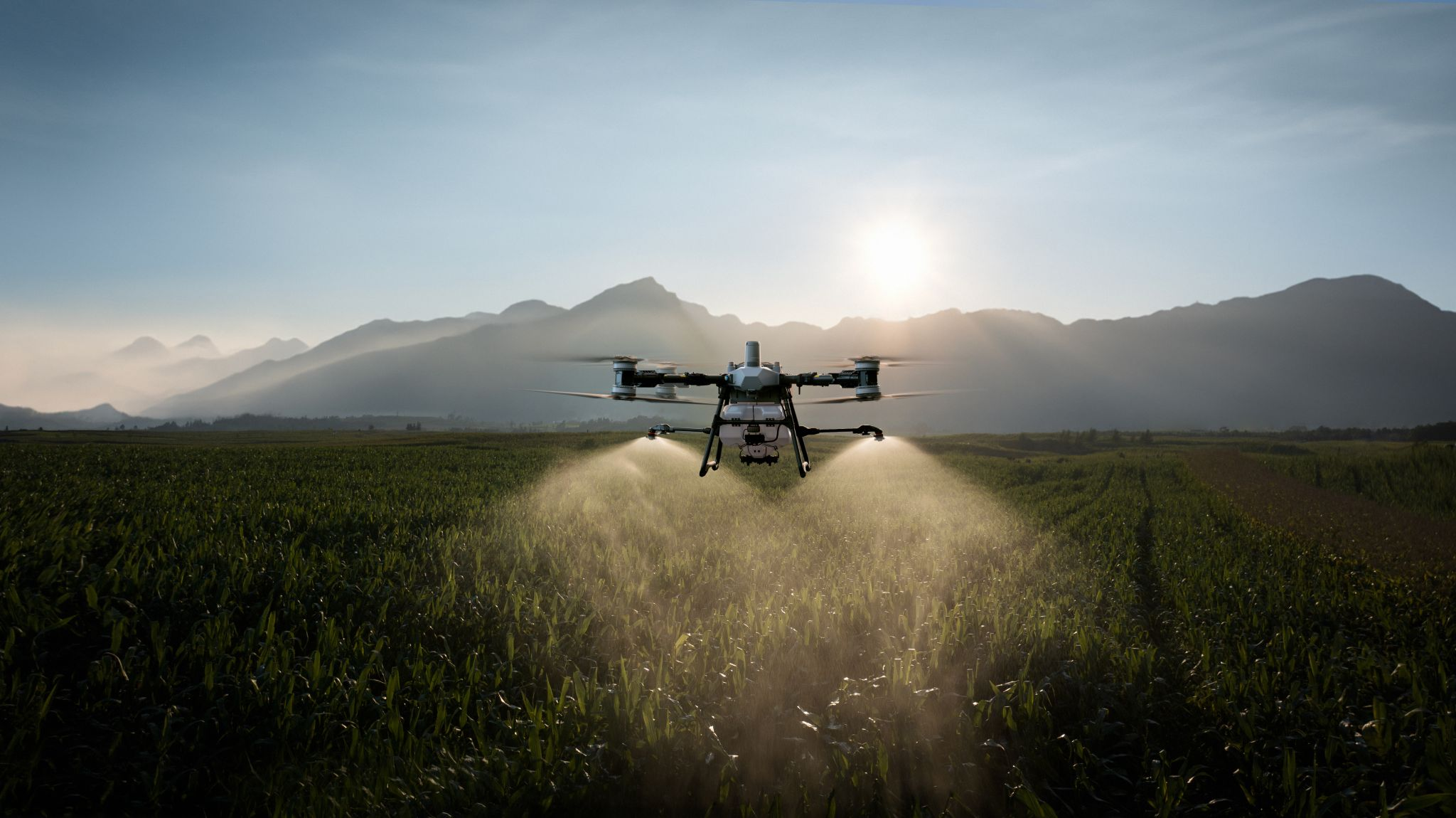
Opening Aerial Spraying
Each DJI aerial vehicles denotes a major revolution in latest plantation approaches. All state-of-the-art robotic flyers are built to meticulously distribute herbicides and other necessary components to arable land. Adopting accurate techniques, the Agras framework diminishes staffing cost, improves results, and stimulates responsible agriculture methods. Husbandmen can now get greater categorization and scope in their plant safeguarding efforts thanks to this groundbreaking advancement.
Agricultural Robotic Aerials: A Cultivator's Handbook to the DJI Agras Portfolio
Each DJI Agras series features a major step forward in precision horticulture innovation, equipping cultivators a powerful apparatus for maximizing growth returns and reducing operational prices. Such automated systems are expressly engineered for spreading plant protection chemicals, supplying a more rapid and exact strategy than conventional techniques. The Agras options boast various forms, each suited for specific land sizes and species types. A summary a compact presentation:
- T lineup: Celebrated for their condensed design and movability, ideal for restricted fields and uneven terrain.
- Agras P Series: Heavy-duty machines assembled for massive areas, allowing increased payload and dispersion metrics.
- V versions: Engineered for fruit farm management, with specific features supporting navigation in crowded environments.
All in all, melding a DJI Agras UAV into your farm can produce remarkable successes in productivity and resource management. Sound coaching and compliance with regional regulations are crucial for protected and efficient utilization.
Improving Bounty: How DJI Agras-like Broadcasting Drones are Changing Crop Cultivation
That plantation market is undergoing a fundamental turning point, caused by breakthrough mechanisms. Broadcasting automated aircraft, especially classes like the DJI Agras, are reshaping how agrarians oversee their plots. These hardware provide remarkable exactness in distributing fertilizers, cutting down waste and amplifying yield growth. Through self-piloting, they service larger territories quicker and with heightened exactness, yielding expanded crop bounties and a cleaner way of contemporary farming methods.
DJI Agras vs. Usual Dispersion: Effectiveness and Ecological Strengths
Planters are risingly evaluating DJI Agras as an new method to standard distribution plans. The capability benefits are noteworthy; drones can access areas much faster than operator-driven equipment, curtailing manpower costs. Moreover, specific dispersion abilities check pesticide leakage, causing a reduced environmental effect and facilitating more responsible cultivation methods.
Advancing UAV Growth: Real-World Roles of the DJI Autonomous crop drones
This Da-Ji Agras series is exponentially gaining acceptance across extended sectors, revealing its potential for modernizing crop procedures. From detailed application of plant protectants in vast croplands to skillfully assessing flora robustness, and enhancing returns, the Agras tools provides a prominent dominance over established techniques. Instances present its use in cereal tilling across Asia, tree fields in Western Europe, and soybean cultivation in Southern South American continent, demonstrating its adaptability and global reach.
Certain Future Related to Farming: Studying Selected Capabilities Of Agricultural Flying Robots
That cultivation market is well-positioned for a critical evolution, mainly due to the growing use with drone systems. The cutting-edge instruments offer unprecedented abilities, covering precision cartography throughout farms, dedicated emission of fertilizers and crop protectants, and all-encompassing monitoring of field vitality. Also, they allow curtailing of labor fees and boost of overall harvests, eventually reshaping the landscape of modern farming practices.
Next-gen Agrarian Practices: Advancing Plant Food Allocation with This Agricultural UAVs
Innovative precision crop production is improving how planters administer fertilizer deployment. The a Agras lineup of automated UAVs carries unparalleled correctness and effectiveness in mineral additive delivery. Harnessing advanced measurement apparatus, these unmanned apparatus enable husbandmen to spread nutrients precisely where called for, decreasing waste and heightening harvest volume. This method not only raises crop gains but also fosters sustainable agronomy techniques.
Contemplating a DJI Agras: Outlays, Benefits, and Revenue for Farmers
Securing a DJI Agras airborne device constitutes a large-scale outlay for countless farmers, but the foreseen advantages can corroborate the preliminary sum. The overall payment includes the equipment obtaining price, ongoing repair expenditures, and instruction payments. However, these expenses are often equalized by improved returns, minimized personnel payments, limited agrochemical use, and raised crop. Ultimately, the yield depends on factors like agricultural site area, produce selection, deployment, and jurisdictional handling circumstances, with accurate preparation and data examination critical for increasing income and obtaining a good pecuniary effectiveness.
Past Distribution : Enhancing the Handling of this Agras in Current Plant Cultivation
Regardless at the start recognized for the crop treatment abilities, the DJI Agras demonstrates a higher potential inside modern plantation fields. Agriculturists are now studying how these all-purpose platforms can be employed for tasks past simple chemical treatment. This covers fine-tuned seeding, dispensing cover plant matter, and even beginning crop robustness analysis via new sensor devices, enabling improvement in streamlined agrarian practices methods.