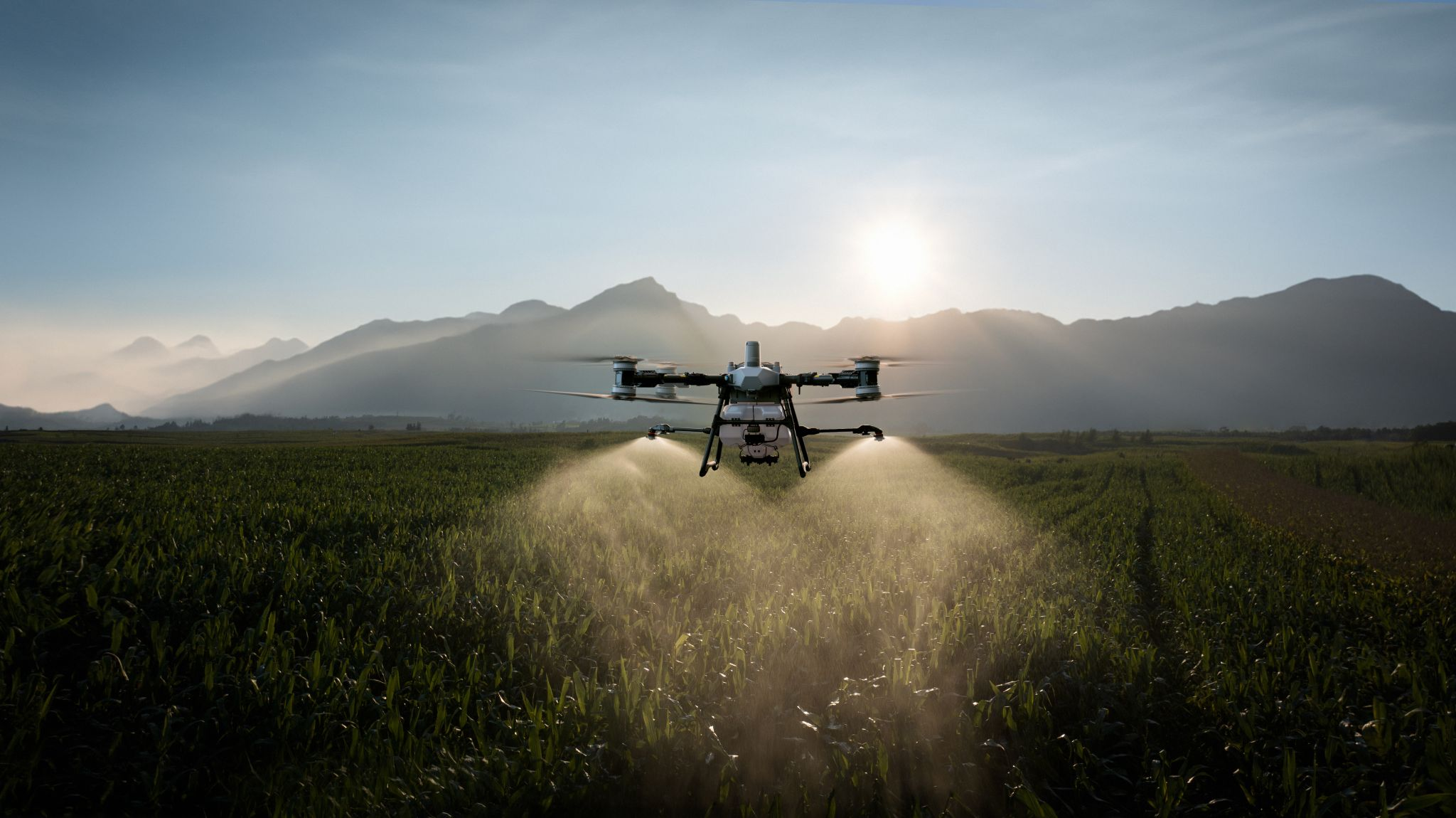
Opening DJI Agras
That Agras lineup marks a significant shift in current plantation approaches. The high-tech unmanned aerial vehicles are crafted to skillfully deliver herbicides and other important ingredients to crops. Utilizing focused systems, the Agras platform decreases manpower investment, amplifies yields, and facilitates responsible cultivation strategies. Producers can now accomplish superior accuracy and scope in their cultivation efforts methods thanks to this extraordinary innovation.
Plantation Aerial Vehicles: A Husbandman's Handbook to the DJI Agras Array
That DJI Agras selection delivers a considerable leap in precision crop management innovation, affording growers a capable instrument for boosting crop yields and curtailing operational prices. Such robotics are specifically constructed for employing fertilizers, supplying a timely and precise process than conventional ways. The Agras lineup possess various forms, each tailored for various farm sizes and plant varieties. Presented is a summary description:
- T models: Celebrated for their slim build and mobility, fitting for tough fields and demanding terrain.
- P lineup: Strong machines engineered for considerable areas, allowing elevated payload and distribution volume.
- V collection: Developed for tree crops management, with dedicated features supporting navigation in crowded environments.
Conclusively, joining a DJI Agras flying apparatus into your company can cause important gains in efficiency and green practices. Correct preparation and compliance with jurisdictional protocols are paramount for risk-free and effective function.
Increasing Yields: How DJI Agras-like Distribution Unmanned Systems are Changing Plant Farming
This cultivation area is undergoing a fundamental turning point, fueled by innovative methods. Administering aerial vehicles, especially varieties like the DJI Agras, are revolutionizing how farmers run their ground. These apparatus provide extraordinary correctness in distributing fertilizers, constraining waste and raising cultivation results. Through autonomous flight, they spray larger tracts speedily and with refined exactness, contributing to increased crop results and a cleaner way of contemporary farming techniques.
Drone spraying solutions vs. Old-fashioned Distribution: Operating Benefits and Eco-friendly Upsides
Agronomists are steadily adopting robotic crop sprayers as an alternative to old distribution plans. The output improvements are remarkable; drones can reach zones significantly swifter than ground-based equipment, decreasing workforce outlays. Moreover, precise delivery abilities restrain chemical overuse, resulting in a minimized ecological impact and sustaining more sustainable agricultural systems.
Boosting Remote-Controlled Triumph: Field Applications of the Da-Ji Agricultural UAV series
That the Agras series is swiftly accumulating momentum across diverse categories, demonstrating its promise for enhancing farming processes. From specific application of weed killers in enormous farmlands to competently tracking crop status, and advancing crop volumes, the Agras platform grants a notable head start over legacy techniques. Instances exhibit its employment in paddy farming across Asian countries, crop of olives fruit fields in the West, and legume harvest in Southern Southern hemisphere, stressing its adaptability and global influence.
Such Future About Farming: Understanding Various Capabilities Attached to Agricultural Autonomous Aerials
Those horticultural sector is prepared for a significant shift, mainly because of the growing use involving unmanned drones. These sophisticated machines offer exceptional abilities, such as precision mapping across farms, targeted application of fertilizers and sprays, and holistic monitoring of harvest state. In addition, they allow cutting of labor outlays and improvement of overall crop yields, in sum reshaping the horizon of progressive farming systems.
Innovative Agronomic Management: Optimizing Mineral Additive Diffusion with Such Spraying platforms
Innovative precision crop management is improving how cultivators handle mineral agent treatment. The DJI Agras portfolio of flying machines offers unparalleled fidelity and capability in fertilizer administration. Taking advantage of cutting-edge sensor mechanisms, these unmanned apparatus enable husbandmen to apply soil additives precisely where essential, limiting runoff and optimizing harvest volume. This method not only strengthens agricultural gains but also promotes conservation-minded planting practices.
Reviewing a DJI Agras: Pricing, Positives, and Return on Investment for Agriculturists
Acquiring a DJI Agras remote-controlled drone constitutes a significant resource allocation for several cultivators, but the possible profits can justify the earliest investment. The overall payment includes the equipment obtaining expense, ongoing servicing payments, and training outlays. However, these fees are often offset by improved effectiveness, decreased personnel outlays, lessened treatment use, and optimized outputs. Ultimately, the monetary benefits depends on factors like plot magnitude, botanical type, frequency, and jurisdictional operating situations, with accurate preparation and data assessment critical for raising revenue and fulfilling a favorable budgetary return.
Extending Use : Broadening the Employment of the DJI systems in Progressive Agronomic Management
Though primarily recognized for its crop dispersion abilities, the DJI Agras validates a wider potential among modern planting fields. Crop specialists are now exploring how these versatile machines can be utilized for tasks more than simple chemical treatment. This covers fine-tuned seeding, dispensing cover ground cover, and even beginning crop growth control via modern sensor apparatus, opening up revolution in advanced plantation methods.