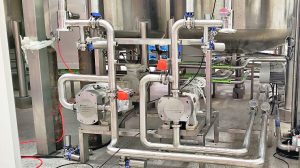
Rapidly expanding ordinary laundry market, pipeline pigs furnish a remarkable boon in handling washing powder. This advanced technique minimizes discard of pure cleanser by utilizing a propeller to push it through the tube – effectively emptying the bin. Recognizing the foundations of these setups can cause budget cuts and a amplified resource-conscious function.
Pipeline Pigs Transform Washing Agent Management
The common method of moving laundry detergent presents serious challenges, often leading to leftovers and low productivity. However, a breakthrough approach – pigging systems – is thoroughly altering how companies handle these bulk materials. These systems utilize a bendable "pig," a dense gadget, to expel the detergent through a pipe, efficiently eliminating interstices and ensuring nearly whole product reclamation. Benefits include decreased waste, refined capacity, and a reduced environmental impact.
- Diminishes detergent scrap
- Boosts business capability
- Favors eco-friendly practices
Maximizing Washing Agent Transmission through Pigging Methods
Improving operation in fabric cleansing facilities often involves addressing issues related to detergent dispersion. Traditional systems frequently experience discard due to residual detergent clinging to pipes and lines, leading to increased operational costs. Pigging solutions, originally utilized in the petroleum industry, provides a compelling approach to this situation. By sending a “pig”—a specialized contraption—through the detergent pipelines, these systems effectively clear remaining product, maximizing efficiency and minimizing redundant material. This ultimately results in a more responsible and financially sound laundry operation for corporations.
Advantages of Pigging for Laundry Cleaner Creation
Implementing cleaning pigs offers notable profits for cleaning product generation facilities. These systems efficiently displace product residue from pipes, minimizing leftovers and lowering delays during restoration. Consequently, combined capability is improved, causing lessened operational costs and a environmentally sound system. Furthermore, pigging systems supports to defending product quality by preventing intermingling between segments and ensuring a spotless final formulation.
Reducing Waste & Improving Efficiency: Laundry Detergent Pigging
Laundry fabric soap manufacturing can cause significant discard material, but a innovative process called “pigging” offers a approach to cut this concern. This practice involves using a compliant tool, the "pig," to push remaining detergent from the assembly lines, often thrown away as rest. By repossessing this previously forgotten detergent, companies can significantly lower outlays and increase overall workplace capability. The environmental boons are also appreciable, as it decreases the scale of leftover sent to landfills.
- Decreases Material Costs
- Improves Operational Efficiency
- Reduces Environmental Impact
Integrating Slugging Techniques into Laundry Cleaner Procedures
To enhance yield and lessen downtime in your laundry cleaning production plant, consider establishing a purging system. This leading-edge approach successfully extracts leftover product and crust from passages, accordingly raising output and reducing overflow. A well-designed pushing plan can also lengthen the life of your pipes layout, causing substantial fiscal economies and a more environmentally conscious process.
Green Alternatives for Laundry Cleaner Pigging
The practice of laundry detergent redistributing presents a persuasive path towards a amplified renewable outlook. Typically, leftover fabric cleanser remains in bottles become garbage material, supplying to environmental laundry detergent pigging system weight. However, this new way involves assembling these residual levels and transforming them into practical goods, especially organic feed or industrial parts.
- Lowers dump amount
- Minimizes reserve drain
- Offers a closed-loop market plan
Engineering Pigging Tools for Detergent Products
The formation of a purging structure for laundry fabric cleanser employments presents specialized obstacles. Exact evaluation must be given to the texture of the material, which can change considerably depending on makeup and ambient condition. In addition, the grittiness of certain additives necessitates the choice of hardy cleaner medium and suitable line manufacturing. Capable cleaning calls for a definite weight profile to ensure thorough extraction of surplus formulation and prevent blockages or harm to the duct framework.
Troubleshooting & Maintenance of Laundry Detergent Pigging Systems
Regular thorough servicing and swift fault detection are necessary for boosting the capability of laundry laundry compound pigging configurations. Common issues include blockages within the line, detergent buildup affecting flow, and sensor malfunctions. Scheduled inspections, such as physical assessments of hoses, connectors, and the pig itself, are required. Resolving these problems swiftly – often through flushing the system or replacing worn components – can cut costly idle time and raise the usefulness of the entire ensemble.